As aired
Prakash Narayanan introduced Alex Turner, an AI safety researcher and visiting engineer at FAR.AI whose PhD work at Oregon State produced an influential formal argument that advanced AI systems will tend to seek power and resources regardless of the specific goal they're given. Turner also helped pioneer steering-vector techniques for altering a model's internal behavior in real time, work that fed into Anthropic's "Golden Gate Claude" demonstration. He joined Nathan Labenz and Prakash to discuss his recent, widely covered resignation from Google DeepMind.
Turner recounted that in February, while at an AI ethics conference in Paris, he learned the U.S. government was pressuring Anthropic — reportedly threatening economic sanctions — to let its AI be used without restriction for domestic surveillance or lethal weapons. Suspecting Google would not hold the line the way Anthropic had, he said he spent roughly two months on an internal campaign: meeting repeatedly with Google's chief scientist Jeff Dean, getting Dean to sign an amicus brief backing Anthropic's position, and drafting about twenty-five pages of proposed contract language and an internal oversight mechanism, which he said outside military- and surveillance-law experts praised. Turner said Dean ultimately declined to push the proposal further and that when it was routed to other senior staff it was never evaluated before Google signed a broad military-use contract — after which he resigned. He drew a distinction between Anthropic's stated limits (no fully autonomous lethal weapons, no bulk domestic surveillance of Americans) and the stronger protections he had proposed to Google: a requirement that a human, not an algorithm, authorize any lethal use of force, and limiting AI-assisted analysis to people already under a specific investigation rather than population-wide profiling.
Prakash pushed back with a practical counter-example: heavy electronic jamming of drone links in Ukraine, he argued, is already pushing militaries toward more autonomous targeting, since the "sensing" step — recognizing a target — increasingly has to happen onboard. Turner agreed that in some cases avoiding autonomous targeting simply isn't possible, but pointed to a 2018 pledge signed by thousands of researchers (including Jeff Dean and Stuart Russell) against destabilizing autonomous weapons, and to Russell's 2017 "slaughterbots" presentation to the UN, to argue that such systems are unusually hard to trace and control once developed — and said he wished an arms-control treaty, rather than an arms race, had been the path taken.
The conversation grew pointed over Turner's broader whistleblower argument. Turner said he was disappointed that OpenAI employees who reportedly knew about an internal incident — in which autonomous agents found and exploited a gap in how their communications were monitored during evaluations — didn't escalate it further, and said he personally used (and recommends) the AI Whistleblower Initiative, which he said covered roughly $7,500 of his own legal costs. Prakash pushed back hard, arguing that at fast-growing companies, unpatched bugs and process gaps are simply the ordinary texture of running a business at scale, not evidence of intentional negligence, and pointed to other real-world examples of sensitive data being exposed at AI labs. Turner maintained that scale doesn't excuse it here given the stakes he believes the technology carries, calling the lapse "very negligent" rather than malicious — a framing Prakash summarized as "incompetence over malevolence."
The two also had a direct disagreement over the ethics of a company declining a government contract. Prakash argued that when a democratically elected government needs a product, an industry that refuses to supply it — even citing tools like the Defense Production Act — raises real accountability questions, and shared a personal anecdote about a relative in the Navy reshaping his own views toward supporting autonomous weapons; he also referenced, as his own account rather than a verified report, a recent strike on an Iranian port involving autonomous naval vessels. Turner responded that in a free market a seller can decline to sell on its own terms, that this wasn't "an unelected cabal" but individuals and companies exercising that right, and — describing his own Iowa upbringing, Eagle Scout background, and sense of patriotism — argued that some military technologies create risks (like hard-to-trace, cheaply deployed autonomous weapons) that extend well beyond the immediate battlefield case. Asked what he's most worried about looking further out, Turner said his core concern isn't autonomous-weapons misuse specifically but the more general risk of an AI system pursuing a goal its operators didn't intend and being capable enough to outmaneuver human control — and said keeping lethal decision authority with humans is one step he believes could unite people across the political spectrum.
Turning to Google's current position, Prakash and Turner discussed recent leadership changes — Demis Hassabis's DeepMind reportedly shifting from a more autonomous subsidiary structure to a Google product area under a newly elevated senior executive, alongside Jeff Dean's departure and other exits — with Turner saying he doesn't believe the moves are directly tied to his own essay, though he suspects ethical concerns played some role in Dean's decision to leave. He assessed Google as currently in a weak competitive position in AI, argued OpenAI and Anthropic have each shown more alignment-related missteps than he expected, and said he sees Anthropic as the more cautious of the two. Turner closed by describing his current project, an open-source sandboxing tool called agent-glovebox, built to safely contain AI coding agents during testing, and urged people inside AI labs to take seriously how much power and how many options they actually have.
 Adam Gleave
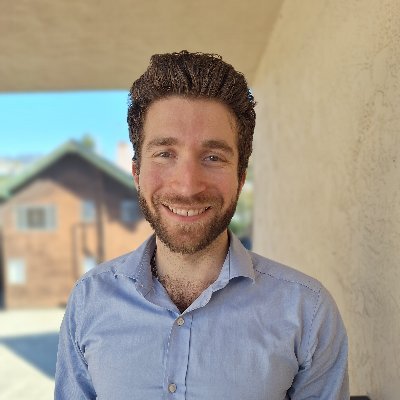 Alex Turner