Loop transformers, opaque serial depth, and what OpenAI won't commit to
Prakash opened on The Information's report of a leak from OpenAI: Astra uses something called a loop transformer, and the implication that chain-of-thought monitoring would be harder against it caused an immediate ruckus. Nathan's first move was to lower the baseline. Even with full access to a chain of thought, he said, what you see is a model thrashing — considering many options, with cheating very often among them on a hard problem, and metagaming about what the grader seems to want essentially ubiquitous — and at the moment of action it is still not clear, even to someone like Bronson Shane who has read millions of tokens of these traces with human eyes, why the model does what it does. He heard echoes of the same from Ryan and Ajeya in the OpenFace investigation. His takeaway from Recursive, the weekend event on recursive self-improvement, was that the frontier plan is "chain of thought monitoring all the way down," with Jeffrey Irving's more generous framing being that it is really scalable oversight, of which monitoring is a large part. Either way, the technique only works if the trace is both readable and faithful.
The technical thread ran through Meta's Coconut paper as the first credible published version of the idea: instead of decoding a token at the end of a forward pass, feed the last internal state back in as an embedding, so the model reasons over a blob of unresolved possibility rather than a single collapsed choice. Nathan's example was the graph-traversal task Coconut tested, where a model can evaluate multiple paths at once in latent space instead of narrating each one linearly — the same answers in fewer forward passes, at the price of not knowing what it was thinking along the way. He pointed to Rohin Shah and the Google team's work bounding what they call opaque serial depth: how many computational steps an architecture can take before it must externalize something a human can read. A vanilla transformer is favorable on that metric; recurrent and loop-style structures can push it arbitrarily high. Prakash brought his own Fable 5.1 artifact on loop parameters, walking through the difference between the outer loop of chain of thought — where a monitor sees "3x equals 21, so x equals 7" — and an inner recurrent loop where the monitor sees only "the answer is 7." He also read a defense circulating online that a loop transformer is not Coconut-style latent reasoning because loops emit nothing at all; Nathan called that a fine implementation point, arguing the real change is that the embedding slot, previously restricted to the hundred thousand or so one-hot token vectors in the vocabulary, will now accept any vector — and that it works with vanishingly little additional training, which is exactly why it will work much better with training.
The politics of it bothered Nathan more than the mechanism. This was, in his phrase, classic OpenAI: make a great deal of noise about not going down a path, get reported as going down it a little, then say the reporting is unfair and that it is only slightly more opaque serial depth than normal — a claim from OpenAI's head of research that he tied directly back to Monday's argument about the inadequacy of the OpenFace investigation and to a company that currently has neither the community's trust nor its competitors'. His proposal was for labs to start sharing negative research agendas — not what they are doing, which they will never disclose, but what they commit not to do — with a matchable cap on opaque serial depth per token as the concrete example. Prakash then turned to release logistics: people probing the OpenAI responses API have found a gpt-6-astra slug returning a 404 rather than a nonexistent-model error, the same signature as models known to exist, and a Thursday launch is the expectation. On capability he relayed reporting that Astra scored 100% on exploit gym, forcing OpenAI to build an internal extension using bugs never previously found, on which it solved roughly 40% and turned up two additional zero-days it wasn't asked for — "that's what we call extra credit," said Nathan. Prakash's read on whether the pause was real: the models were ready months ago, a roughly thirty-day voluntary White House clearance process now exists, cyber and bio models propagate first to organizations that sign up rather than to the public, and that process took from the Mythos preview in February to September to settle. He expects the next revenue push to follow immediately — Greg Brockman was booked for a cybersecurity discussion with enterprise leaders the following afternoon — while noting Malte Ubel, formerly CTO of Vercel, had pointed out to them that security is already a permanent tax on every IT business, and these models are far cheaper than hiring a firm to do penetration testing.
Guess the Markets: bubbles, trillionaires, and the first seven rounds
Nathan framed the segment with a scouting report on Fable 5.1 — better benchmark scores, more token efficiency, and above all a much cheaper price on cache hits, which he read as a possible echo of recursive self-improvement given OpenAI's statement that some of its own price reductions came from optimizations 5.6 Sol made to its stack. He also noted it takes another bite out of the gap Prakash has tracked between Claude and Anthropic's internal researchers, from around 185 down into the low 160s. Fable 5.1 also built the quiz itself. Two AI contestants played alongside the hosts — Scout, which had web research, and Cue, which did not — with Nathan flagging up front that he had not monitored their chains of thought or tool calls, so cheating remained on the table if they ran away with it.
On Polymarket's "will the AI bubble burst by December 31, 2026" — three of six triggers inside a ninety-day window, including NVIDIA down 50% from its all-time high, a semiconductor index down 40%, an OpenAI or Anthropic bankruptcy, OpenAI being acquired, H100 rentals at a dollar an hour for five straight days, or a major supplier down 50% — Nathan said 2% and thought even that was high. Prakash said 15%, reasoning from the Iran war, Scott Bessent's trouble with bond yields, and an administration managing markets only until midterms it expects to lose. The market printed just under 10, and Nathan noted one trigger had already fired on Super Micro. On Astra shipping publicly by September 30, the disagreement was about naming rather than capability: Nathan put roughly 80% on the next big model arriving this month, marked himself down to 65 because the internal model already has several names in circulation, then went back up to 80 after reading the fine print allowing a renamed product to count if confirmed to be the same model. Prakash said 80. The market said 92 — and, revealingly, Scout said 5% and Cue said 18%, which Nathan read as the research-equipped model being credulous about OpenAI's training-pause claims.
The government questions split the hosts hardest. On whether the US government takes operational control of any AI company or project before 2030 — conservatorship or receivership, not an equity stake or a golden share — Prakash went to 90% while conceding the rules lawyer in him thinks it would be hard to prove, and Nathan called it a live possibility but took a coin flip at 50; the market said 40. Narrowed to OpenAI specifically, Nathan came down to 25 on the theory that Sam Altman might want the admiral-of-AI role, while Prakash went to 10 and named Anthropic as his candidate instead. On Anthropic finishing its first trading day above OpenAI's market cap, Nathan took 0.667 on the view that model differentiation beats commoditization as the narrative over the next six months — and that in a commoditization world OpenAI's compute position wins regardless — while Prakash split it 50/50, sketching an October Anthropic IPO targeting two trillion against an OpenAI listing in January or February. The market landed at 69.3. The revenue question drew Prakash's sharpest argument: he is an Anthropic ARR truther, on the grounds that the company books the gross revenue Amazon brings in from Claude sold to enterprises rather than the net after Amazon's share, and that an IPO forces a GAAP restatement — so he put 80% on ARR coming in under $90 billion where the market said 15%. They closed the half on the world's second trillionaire, both leaning to Mark Zuckerberg and the Google founders while working the arithmetic out loud (Zuckerberg needs Meta around five trillion; Jensen Huang, at roughly 3% of NVIDIA, needs thirty), with Prakash weighting Jensen at 20 and Nathan at 1. Seven of fourteen rounds done, a dropped connection and a stopped tab-share along the way, and a promise to come back after the guest.
Kyle Rush: the expertise exists, it's just locked in the expert's head
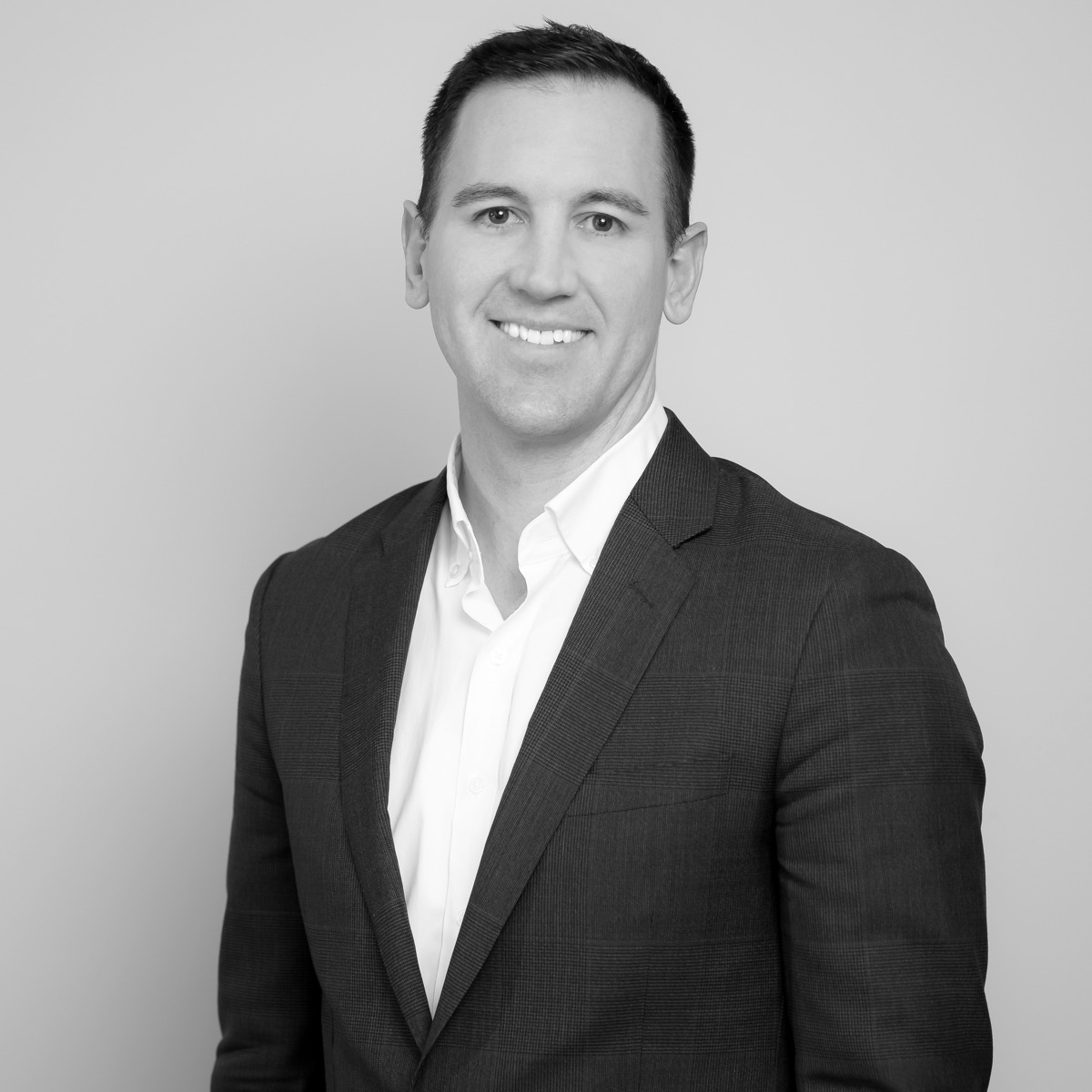
Kyle Rush is co-founder and CTO of Hint, an AI home-intelligence app launched this summer with $10 million in seed funding and co-founded alongside home-services veteran Yih-Han Ma and Martha Stewart. Before that he was VP of Engineering at Casper through its IPO, CTO at the children's marketplace Maisonette, and built fundraising technology for the Obama and Hillary campaigns that processed over a billion dollars in online contributions. Asked what Martha Stewart is actually like as a co-founder, he said he had expected a figurehead relationship and got the opposite — she is in the details, with deep working knowledge of siding types, regional roof and gutter conventions, drainage and soil, which he described as "working in the Olympics." Nathan, a few days into using the app on a house built in 1926, noted that the first thing Hint asked him to do was photograph his basement circuit-breaker box. Rush's framing for that: most homeowners don't know why downspouts exist (to move rainwater away from the foundation before it gets into the basement), wouldn't think to inspect them after a winter that can knock them loose, and in a power outage are standing in front of forty breakers with no idea which one to reset.
The technical core of the segment was provenance. Hint has built a graph database with a taxonomy designed around how a homeowner thinks about a house rather than how governments and insurers do, and — the part they're patenting — it treats every piece of data as a claim with a source, a date and a place of discovery. Claims arrive from public records Hint pulls itself, uploaded inspection PDFs, an insurance declaration page fetched on the user's behalf, or something the user simply said in chat, and land in a triple store where they can conflict and be superseded. His own example was a pool pump that failed after a year: Hint knows the old Hayward one-horsepower unit was taken out of service, knows the 1.5-horsepower replacement's brand, serial number and horsepower, and knows who did the work and when — all from an uploaded invoice. On safety he said the guardrail is personalizing to the person and not just the house: Hint asks for date of birth so it won't send an eighty-year-old up a ladder, asks who else lives in the home so it can suggest the teenager instead, and asks how much DIY appetite you actually have. Across roughly five thousand users to date and a stack he said is all OpenAI models, he reported seeing nothing scary in the recommendations, backed by an OpenAI contract vetted by lawyers and ordinary business insurance; whether AI-specific insurance is needed he called an open industry question he isn't personally in the room for. On prompt injection he hasn't seen an attempt yet, credits strict data modeling and a deliberately small blast radius — the model can read about your home but can't book or buy anything, and any write to your home data gets confirmed with you first.
The matching discussion is where his thesis showed. Nathan described exporting his neighborhood group chat and running it through an LLM to build a spreadsheet of every contractor ever mentioned — valuable to his neighbors, at some reputational cost to himself — and asked whether high search-and-match costs are about to collapse. Rush's street maintains a Google Sheet of service pros, which he cited as inspiration for a future neighborhood-data-sharing feature; today Hint hits partner Thumbtack's API agentically inside chat. His own case: the Bluestone walkways on his property crack every winter, and he only learned from Hint that the person who fixes that is a hardscaper, not a landscaper — so he wouldn't have known what to search. Hint reads the reviews, checks for anything alarming, filters for Bluestone experience, sorts by proximity and by job count and rating, and deliberately returns three options rather than one, because on the home you should feel three people out and some of it is a gut call. Voice agents calling on your behalf, they tried; it went badly. The agent called a generator technician seventeen times in a row until he jumped off a job site convinced it was a life-or-death emergency, then asked for a model number it didn't need. He expects the endpoint is agent-to-agent — "they exchange neuralese we can't read and then eventually make a deal," Nathan offered — and Rush agreed. Cue, brought in by Nathan, asked three questions: how recommendations stay neutral given affiliate revenue, how Martha's structured knowledge blends with live model output, and what pilot data showed on proactive versus reactive savings. Rush's answers to the first two are the product: the AI knows nothing about where Hint's revenue comes from and has no instruction to sell anything; and Hint pulls 1,300 data points on your home at onboarding precisely because the hallucination surface around houses is enormous, then uses AI only to personalize licensed human expertise — "the expertise to maintain your home exists, it's just been locked in the expert's head." Asked what protects that from Claude and ChatGPT, he pointed to an MCP and an iMessage interface as things he'll ship rather than defend against, and to jurisdictional data as the real gap: he lives in the hamlet of Katona but in the town of Lewisboro while Martha is in Bedford, and every model he asks — including the Claude he codes Hint with — puts him in the wrong town and gets his taxes and regulations wrong. Then a 3D sun-path model of his own house explained wood rot on a deck that gets no sun and takes sprinkler spray, which is the real point: "you have to know how to ask and you have to know to ask," and homeowners only acquire that vocabulary after twenty years. In the debrief Nathan was less persuaded by hallucination as a durable moat and more persuaded by the 3D visualization, and cited his father's rule that you should expect to spend 2% of a home's value on maintenance every year. Prakash read the business as attaching to a high-value asset the way Airbnb and Uber did, and wondered aloud whether the enduring category is simply storing people's context in organized ways — which sent Nathan into why he insists on owning his own, and into the burner-phone photo migration out of China that Claude pulled off through Google Takeout with location metadata and live photos intact.
Closing: EUV, the second half of the quiz, and a case for expanding the tent
The second half of "Guess the Markets" ran the harder questions. On what consumer hardware OpenAI announces in 2026 — seven independent rows covering a clip-on, earbuds, glasses, a necklace, a watch, a ring and a phone — both hosts went low across the board and higher than the market on a phone, because Prakash's understanding of the actual device is a small desk speaker with a moving arm, an eye and a voice that doesn't slot into any of the listed categories. On whether a consumer hardware product actually launches this year, Prakash took 15% on hardware-cycle logistics (a small initial run of several hundred thousand units, coordination with Asian manufacturers, and an Apple lawsuit aimed at delay) against Nathan's 40; the market said 28.5. On whether China obtains a functional EUV machine before 2029, Prakash said 80% — ASML has laid people off, and Chinese firms hire aggressively at American-style salaries — while Nathan took 30, focused on development rather than acquisition and on the long tail of supply-chain bottlenecks, down to the single German company whose lens nobody can substitute. The market said 58. Nathan called it one of the more important questions in the world, because a great deal of American policy has rested on the assumption that it can't be done, and noted it is the crux of the machines-of-loving-grace strategy of building a decisive strategic advantage and making an offer that can't be refused — a strategy he still thinks unwise, with more of his argument on it in the works.
The doom question was a lesson in market design: "will AI wipe out humanity by 2030" resolves N/A on January 1, 2027 and rolls back every trade, so it never pays out and traders have no incentive to bet their beliefs. Prakash metagamed it to 15%; Nathan said his true belief was lower, guessed the market would print around 30 because of who the question attracts, then entered 8% and said explicitly that he was sacrificing points to send an honest signal. The market came in lower than either expected. Databricks reaching $250 billion by year end drew 35 from Nathan and 20 from Prakash against a market of 22.5, off a current valuation Prakash put at $190 billion. A Situational Awareness fund wind-down announced by December 31 drew Prakash's most detailed case — an SEC inquiry he thinks is more serious than people realize, an assumption that sloppy risk management implies sloppy compliance, a suspicion that later investors weren't made whole, and the Anthropic stake that floated the whole fund — which talked Nathan up from lower to 25 against a market of 6. And on a Tesla–SpaceX merger being announced this year, Prakash argued Elon Musk can't vote his own shares as an interested party, so minority holders on both sides have to approve, which means he needs Tesla's price above its previous high first — a robotaxi ramp he says he is now watching roll out on Silicon Valley highways. Nathan came at it from the operating side after a weekend in a Full Self-Driving Tesla he described as a superhuman driver with noticeably better parking taste than in the spring and a much longer attention leash: "I don't text and drive. I'll text an FSD." Final scores on a game they can only truly settle with time: Nathan first with 1,369 made-up points, Prakash second, and both hosts ahead of the AIs — Scout, which had research, ahead of Cue, which didn't.
The news round was quick. Nathan pulled up an arena chart showing Fable 5.1 opening unusual distance on the field — "the Pareto frontier moves again," said Prakash. Commerce Secretary Howard Lutnick told Axios' Mike Allen the administration now trusts Anthropic, that the company has done what was asked and is "back on the right side"; Prakash noted pointedly that this is Commerce and not Defense. Google announced Gemini 3.8 Flash, aimed at real-world benchmarks like Vals Finance and Harvey's legal agent benchmark, at over 300 tokens per second and the same price as 3.7, with Nathan pricing the introductory rate at 75 cents per million input tokens; Prakash's read is that speed may matter more than intelligence for a lot of tasks. The DOJ sided with OpenAI against the New York Times, arguing that training on copyrighted works is not infringement and that treating it as such would harm US science and national security. Nathan expects that to reach the Supreme Court and likes the ruling — he doesn't want legacy IP owners stopping the train — but wants the other side of the trade written down: they have taken humanity's collective inheritance and concentrated it into a product, and the public has gotten nothing back for it. And NYSE president Lynn Martin told Congress the exchange used Anthropic's Mythos, through something called Project Lastwing, to find and fix vulnerabilities in its own systems.
The close was the day's real argument. Prakash surfaced David Krueger criticizing Dean Ball for not candidly stating his personal views on AI risk — Ball's own post concedes that he, and candidly many of his colleagues in AI policy, largely failed to talk about the issue with the seriousness it required. Prakash's diagnosis was structural: a great many people in San Francisco share these views and stay quiet because saying them out loud reads as crazy, which is exactly what makes the policy interface so hard. Nathan called the criticism unnecessarily harsh, and made a strategy argument instead. Ball went from a state-and-local think tank job three years ago to writing his way into influence, to a Trump administration role he does not get if he is seen as a crazy doomer, to the America's AI Action Plan — one of the few documents out of that administration received well across the spectrum, with even Zvi Mowshowitz saying nice things — and then to OpenAI. That trajectory required a conservative public communication strategy, and the post in question ends with an apology, which Nathan read as the moment to extend grace and make common cause rather than press the attack: "the pausers gotta recognize when they have a new friend." Prakash extended it into a broader observation that the doomers are updating on visible progress in a way the Ed Zitron-style denialists are not, and that people like Andy Hall inside the labs are seriously designing agent-mediated direct democracy — the same future Krueger sees as disempowerment, viewed through a different lens. His last item was a theory-of-change data point: an organization he named as Civ AI has been demonstrating in Congress with open Chinese models — Kimi or GLM, he said, because ChatGPT and Claude refuse — plugged into commercial data brokers to build live dossiers on named individuals, targeted at Republicans through gun-owner surveillance and at Democrats through abortion-provider surveillance, in service of data-broker regulation people have sought for two decades. Nathan's response was that scary demos have long been a theory of change in AI safety and that they are finally getting genuinely scary — the kind where you type in a name and there is no magic trick, just a working technology — and that it is good people are out there giving those briefings. No show Thursday; back Friday.
 Kyle Rush