AI:AM GUEST

Kunle Olukotun

Co-founder & Chief Technologist, SambaNova; Cadence Design Systems Professor, Stanford

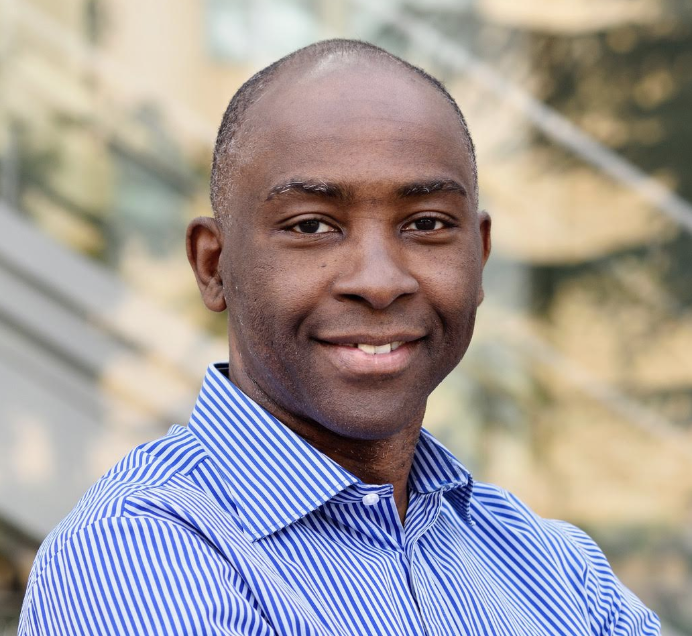
Kunle Olukotun is the Cadence Design Systems Professor of Electrical Engineering and Computer Science at Stanford and a father of the multicore processor — his 1990s Stanford Hydra chip multiprocessor is foundational to the multiple cores in every modern phone and laptop. He co-founded SambaNova, where as Chief Technologist he bet against the GPU with a Reconfigurable Dataflow Architecture (the RDU) that maps a model's dataflow graph directly onto silicon.
APPEARANCES

One AI:AM appearance.

EPISODE 2026-07-02 · JUL 2, 2026

AI:AM LIVE — July 2, 2026 — The Export Regime Blinks and Washington Eyes a Stake in the Frontier: Kunle Olukotun

The opening tracked a week in which the US government kept fusing with the frontier — first over access, now over ownership — while open-weights economics quietly undercut the whole premium. Commerce withdrew the export-control requirement on Anthropic's Fable 5 and Mythos 5 after an 18-day freeze, and Anthropic began restoring Fable 5 globally under new terms: a cyber-classifier, a HackerOne bounty program, a cross-lab jailbreak-severity framework, and — the load-bearing part — earlier pre-release access for the US government to test future frontier models. In the same window, the FT reported OpenAI floated a ~5% stake (roughly $42.6B) to Washington, with Altman said to have proposed the same from every leading US lab into an Alaska-Permanent-Fund-style vehicle. Underneath the policy noise, the business fight got quantified: independent evals now rank GLM-5.2 the top open-weights model and #3 overall on agentic knowledge work (though verbose and hallucination-prone), and a Chamath n=1 pilot pairing it with an agent harness cut a modernization task's cost ~16× vs Opus 4.8. Kunle Olukotun — co-founder & Chief Technologist of SambaNova, Stanford's Cadence Design Systems Professor and a father of the multicore processor — then joined for the architect's-seat conversation on whether reconfigurable-dataflow silicon (the RDU) finally wins the economics of reasoning-model and agentic inference. Nathan pressed the dataflow-vs-GPU thesis (map the model's dataflow graph onto silicon rather than stream instructions through fixed cores), the three-tier-memory bet, and the Composition-of-Experts pitch (many specialized models resident on one system, which the SN50 is purpose-built for) against a brutally consolidated 2026 field: Nvidia bought Groq for ~$20B, Cerebras IPO'd at ~$66B, and Intel — after reportedly exploring a ~$1.6B acquisition — instead took a Series E stake in SambaNova's down round (~$2.2B, from $5.1B). The recency-disciplined proof point: SambaNova set a DeepSeek-R1 671B speed record (~198 tokens/sec/user on 16 SN40L RDUs) verified by Artificial Analysis in February 2025 — now ~17 months old, so framed as trajectory, not current best, with the live question being where custom silicon durably wins on cost-per-useful-token and whether the independent inference-chip bet ends in absorption or independence.

GUESTS · Kunle Olukotun